Do Breast Surgery Scars Remain? Bra Use After Breast Surgery
One of the most common concerns among patients considering breast aesthetic surgery is postoperative scarring.
Realistically, some degree of scarring occurs after breast surgery because surgical incisions are required to enlarge, reduce, lift or reshape the breasts.
However, the aim of modern plastic surgery is not simply to perform the operation. It is also to place incisions in the most appropriate areas whenever possible, handle the tissues carefully and achieve scars that become less noticeable over time.
The shape and length of the scar depend on the type of surgery performed.
Where Is the Scar After Breast Augmentation?
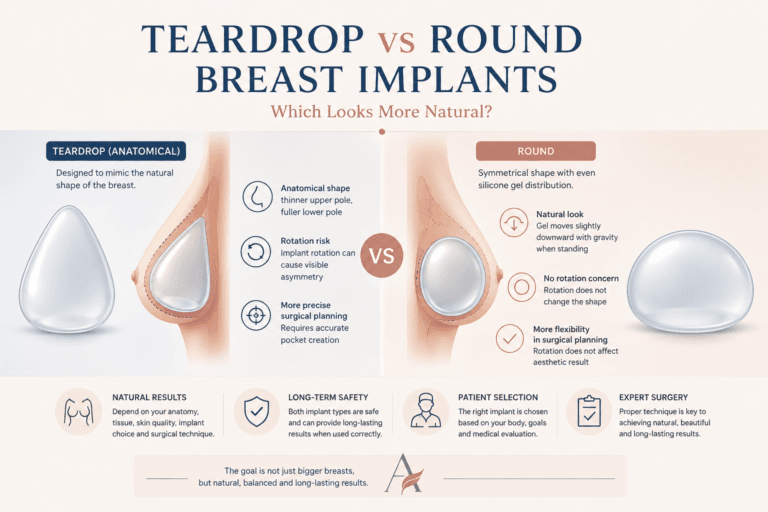
If breast augmentation alone is performed, the incision is usually placed in the inframammary fold beneath the breast.
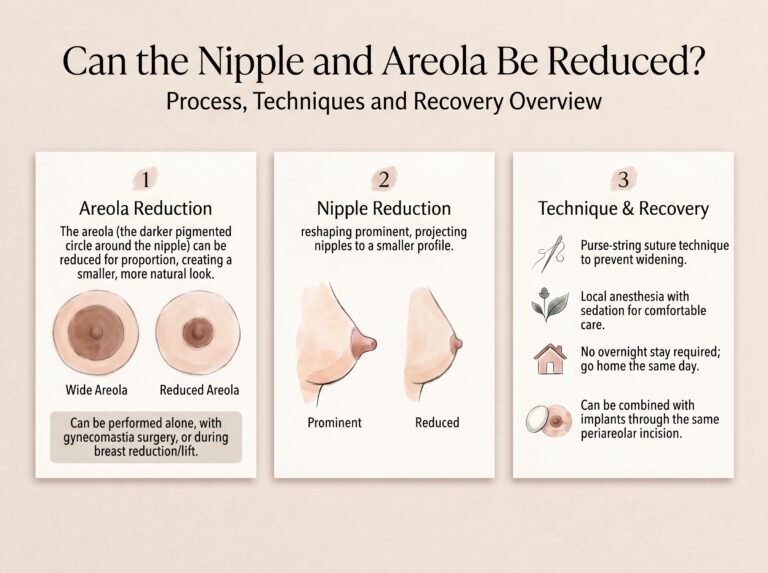
In some patients, an incision around the areola may also be considered. The choice of incision depends on factors such as implant selection, breast anatomy, the amount of existing breast tissue and the overall surgical plan.
Scars following breast augmentation are generally relatively short and tend to soften and become less noticeable over time.
Are Scars More Extensive After a Breast Lift?
Breast lift surgery is somewhat different.
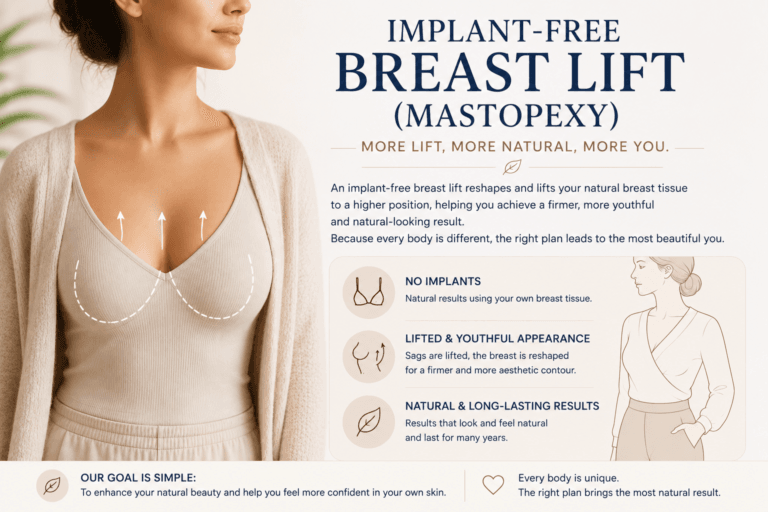
In sagging breasts, simply adding volume may not be enough. Excess skin may need to be removed, the breast tissue reshaped and the nipple repositioned to a higher level.
For this reason, breast lift surgery may involve scars:
- Around the areola
- Vertically from the areola down towards the inframammary fold
- Along the inframammary fold when necessary
This combination is commonly referred to as an inverted-T scar or anchor scar.
Although these scars are usually more noticeable initially, they tend to soften and fade during the healing process and, in many patients, become much less conspicuous over time.
The scar within the inframammary fold is often particularly well concealed because it lies within the natural fold beneath the breast.
Is Wearing a Bra Necessary After Breast Surgery?
Another common concern among women considering breast surgery is whether they will still need to wear a bra afterwards.
Some women have spent years wearing supportive bras to make their breasts appear more lifted, padded bras to create more fullness or firm supportive bras to improve the appearance of sagging.
For this reason, many patients report feeling more comfortable without a bra after breast surgery, once a more balanced breast shape has been achieved.
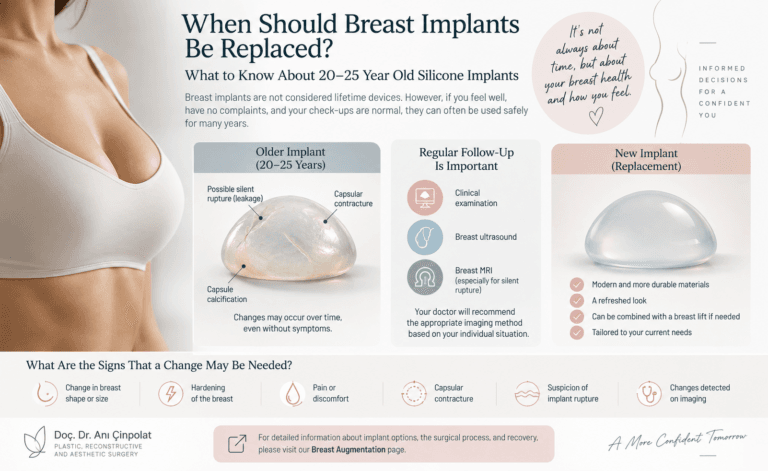
However, during the early postoperative period, wearing a specialised surgical bra is important for healing.
Medical bras are generally recommended for approximately the first six weeks because they can:
- Provide support to the breast tissues
- Help reduce swelling
- Help protect the newly shaped tissues during the healing period
Is It Possible to Live Without a Bra in the Long Term?
The answer depends on the type of surgery performed and the individual characteristics of the tissues.
After breast augmentation, particularly in patients without significant breast sagging, living without a bra can often be very comfortable in the long term.
Patients who undergo breast lift surgery may also find that they need a bra less often because the breasts have been reshaped and lifted.
However, gravity, ageing, pregnancy, weight fluctuations and skin quality continue to affect the breasts throughout life. For this reason, some patients may choose to wear a supportive bra at certain times in the long term.
This does not mean that the surgery has failed. The purpose of breast aesthetic surgery is not to stop the ageing process completely, but to achieve a breast shape that is more balanced, natural and harmonious with the patient’s body.
Natural Results and Realistic Expectations
Successful breast aesthetic surgery is not simply about changing breast size or correcting sagging.
The aim is to achieve a result that suits the patient’s anatomy, looks natural and remains harmonious with the body over time.
For this reason, breast scars, tissue quality, breast shape and the patient’s lifestyle should all be considered together when creating an individualised surgical plan.
For more detailed information about breast augmentation, breast lift and breast reduction surgery, you can visit the related procedure pages. You can also find further information about the management and treatment of surgical scars on our scar treatment page.