
Facelift & Neck Lift in Turkey
Facial ageing is a natural process caused not only by loss of skin elasticity, but also by loosening of the supporting connective tissues beneath the skin and the downward displacement of the deeper fat compartments of the cheeks.
During the early stages of facial ageing, small amounts of strategically placed dermal filler or nonsurgical skin-tightening treatments such as focused ultrasound can produce fresh and subtle results. However, as the supporting ligaments become progressively weaker and facial tissues descend further, attempting to lift these tissues solely by adding more filler is not always the right approach.
One of the common misconceptions in modern aesthetic medicine is trying to compensate for sagging tissues by repeatedly adding volume. Over time, excessive filler may alter the natural architecture of the face and create a broader, heavier or less natural appearance.
At Anka Plastic Surgery in Nişantaşı, Istanbul, our approach to facial rejuvenation is not based on enlarging the face with filler, but on identifying whether the main problem is volume loss, tissue descent or both.
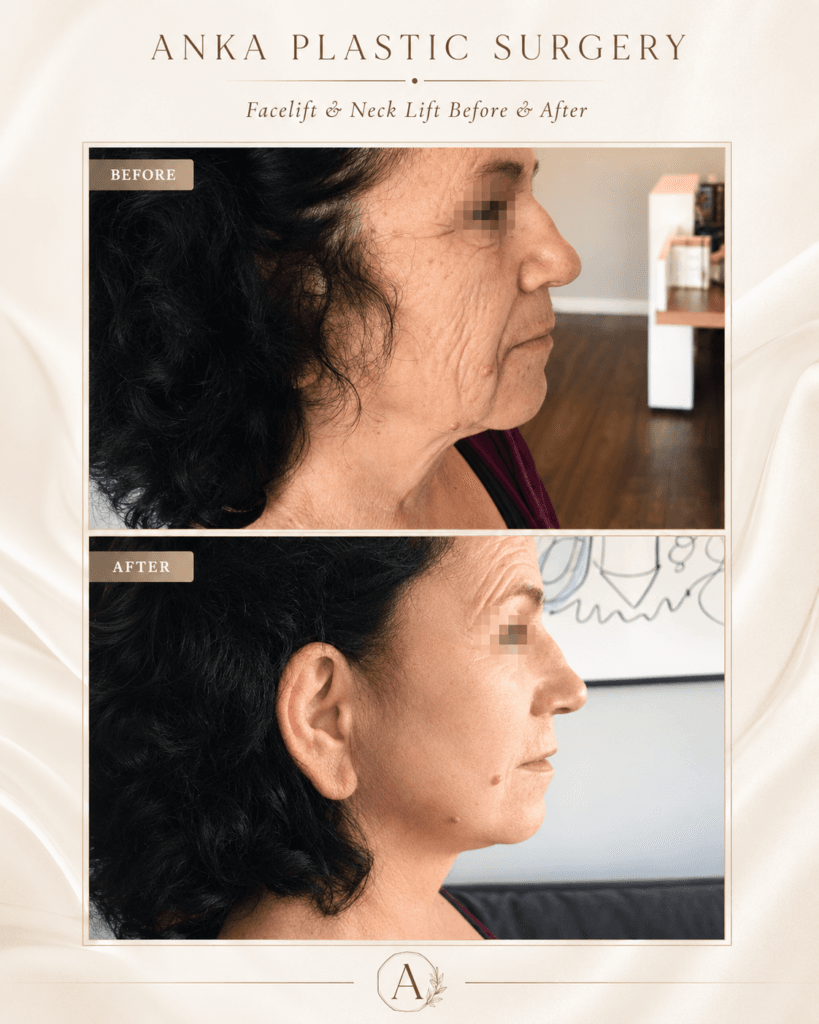
When facial tissues have descended significantly, facelift surgery can reposition the deeper supporting structures rather than simply adding volume. Depending on the areas affected, treatment may range from a mini facelift to a more comprehensive deep plane face and neck lift.
Modern facelift surgery does not need to be postponed until severe skin laxity develops. In appropriately selected patients, the aim is to restore facial tissues towards a more youthful anatomical position while preserving natural expression and facial identity.
Turning Back the Clock: Knowing When to Move from Fillers to Facelift Surgery
The key to successful facial rejuvenation is choosing the right treatment at the right time.
During the early stages of ageing, when tissue descent is mild, carefully placed micro-volumes of filler and treatments that support skin quality can provide elegant results.
However, once fillers are no longer sufficient to compensate for tissue descent, injecting increasing amounts simply to create a lifting effect may distort facial proportions. This is often the point at which a limited face lift surgeryprocedure becomes a more appropriate option.
A Stepwise Approach to Facial Rejuvenation
- Early Stage – Nonsurgical Treatments: Strategic small-volume fillers and device-based treatments aimed at improving skin quality.
- Intermediate Stage – Minor Surgery Under Local Anaesthesia: When fillers begin to lose their ability to provide adequate support, procedures such as a Mini Facelift or Mini Temporal Lift may be considered. These procedures can be performed at our clinic under local anaesthesia without the need for general anaesthesia.
- Advanced Stage – Comprehensive Surgery: When tissue laxity affects the midface, lower face and neck more extensively, a deep plane facelift and neck lift may be recommended in a hospital operating theatre.
📌 Note from Assoc. Prof. Gamze Bektaş
In my clinical practice, I frequently use dermal fillers and value the subtle improvement that carefully placed filler can provide. However, one of the most important principles in facial aesthetics is knowing when to stop. Once filler is being used primarily to lift descended tissues, the face can gradually become broader and heavier. At the appropriate stage, repositioning the tissues with a mini facelift or temporal lift may provide rejuvenation without unnecessarily increasing facial volume.
Natural Results and the Anatomical SMAS / Deep Plane Facelift Approach
Regardless of the extent of surgery, a facelift should not create an excessively tightened, windswept or surprised appearance.
Older facelift techniques that relied mainly on pulling the skin could place excessive tension on the skin itself and may contribute to recurrent laxity or distortion around the ears.
Modern facelift surgery focuses more on the deeper supporting anatomy of the face. One of the key structures is the SMAS (Superficial Musculoaponeurotic System), a fibromuscular layer beneath the skin that plays an important role in facial support.
In a SMAS facelift or deep plane facelift, the aim is not simply to tighten the skin. Instead, the deeper tissues are mobilised and repositioned towards a more youthful anatomical position.
This allows the cheeks, lower face and jawline to be treated with less reliance on skin tension and helps preserve a more natural facial expression.
The exact surgical plane depends on the patient’s anatomy, the degree of tissue descent, skin quality and whether the neck also requires treatment.
What Is a Deep Plane Facelift?
A deep plane facelift is a surgical technique in which deeper facial tissues are released and repositioned as a more unified anatomical layer rather than relying primarily on skin tightening.
The technique can be particularly useful when ageing involves the cheeks, jowls, jawline and deeper facial support structures.
In appropriately selected patients, a deep plane approach may help improve tissue descent while maintaining a softer and more natural transition between the different areas of the face.
Nonsurgical Facelift Alternatives and Their Limitations
In the earlier stages of facial ageing, nonsurgical treatments may still be very effective.
Options such as dermal fillers, HIFU, radiofrequency treatments, thread lifts and liquid facelift techniques may improve mild laxity, selected areas of volume loss or skin quality.
However, these treatments have clear limitations.
When there is significant excess skin, deeper tissue descent, jowling or marked laxity of the lower face and neck, nonsurgical treatments cannot reproduce the anatomical repositioning achieved with face lift surgery.
For this reason, the question is not simply whether a patient is “too young” or “too old” for a facelift. The more important question is what has actually changed anatomically.
If the main problem is volume loss, filler may still be appropriate. If the main problem is tissue descent, repeatedly adding volume may make the face appear heavier rather than more youthful.
Mini Facelift
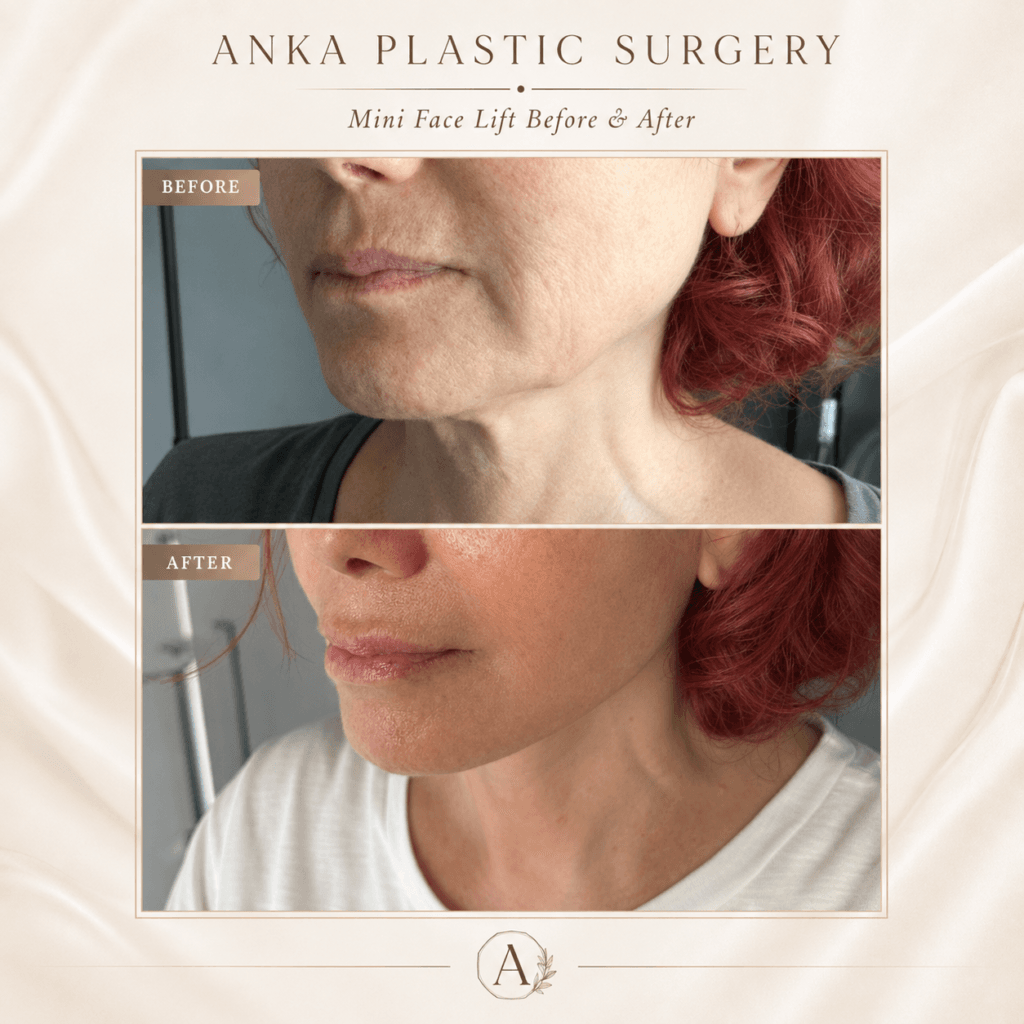
A mini facelift is generally considered for patients with early to moderate descent of the cheeks, jowls and jawline who do not yet require a comprehensive face and neck lift.
At Anka Plastic Surgery, the term “mini” refers mainly to the more limited area being treated, shorter incision and smaller surgical field. It does not mean that the procedure is simply a superficial skin-tightening operation.
Does “Mini” Mean Superficial?
No.
Our mini facelift approach involves mobilisation and repositioning of the deeper supporting facial tissues, including the SMAS layer, rather than relying only on tightening the skin.
Depending on the individual anatomy, this may involve a limited SMAS flap or deep plane dissection. The aim is to reposition the descended tissues while minimising unnecessary tension on the skin.
Who Is a Mini Facelift Suitable For?
A mini facelift may be appropriate when the main concerns are:
- early jowls
- reduced jawline definition
- mild to moderate cheek descent
- early lower-face laxity
- limited marionette-area heaviness
It is generally less suitable when there is significant neck laxity, pronounced platysmal banding or extensive excess skin. In these cases, a more comprehensive face and neck lift may provide a better anatomical correction.
Technical Principles of Our Mini Facelift
1. Vertical Vector Rejuvenation
Rather than pulling the face excessively backwards, descended cheek and jowl tissues are repositioned primarily in a vertical or superolateral direction, according to the patient’s anatomy.
This helps preserve the patient’s characteristic facial expression and avoids an overly stretched appearance.
2. Correction of Jowls and Jawline Definition
Jowls develop when soft tissues of the lower face descend over the mandibular border, reducing the definition between the face and neck.
During a mini facelift, these tissues are released and repositioned upwards. This can improve the contour of the jawline, lower face and cheek region.
3. Tumescent Local Anaesthesia
Selected mini facelift procedures can be performed at our Nişantaşı clinic under tumescent local anaesthesia, without the need for general anaesthesia or hospital admission.
4. Fine Drain Placement
When appropriate, very fine drains may be placed temporarily beneath the tissues to reduce the risk of blood or fluid accumulation.
They are generally removed during the first postoperative review.
5. Concealed Incisions
Mini facelift incisions are positioned within the natural anatomical creases around the ear. They may be hidden around the tragus, continue around the earlobe and extend for a short distance behind the ear depending on how much skin needs to be removed.
After the deeper tissues have been repositioned, excess skin is removed conservatively without using excessive skin tension to create the lift.
How Is a Mini Facelift Performed?
The operation is planned according to the areas of tissue descent and the individual facial anatomy.
- Anatomical Mapping: The cheek, jowl and lower-face areas are marked while the patient is standing.
- Tumescent Infiltration: Local anaesthetic solution is introduced into the surgical area.
- SMAS / Deep Tissue Mobilisation: The deeper supporting tissues are released and repositioned in a predominantly vertical direction.
- Skin Adjustment and Drain Placement: Excess skin is conservatively removed and a fine drain may be inserted.
- Aesthetic Closure: The incisions are carefully closed with fine sutures.
Mini Facelift Recovery
Recovery after a mini facelift is usually shorter than after a comprehensive face and neck lift, although swelling and bruising vary between patients.
First 24 hours: Fine drains, when used, are usually removed during the first postoperative visit.
First week: Non-absorbable sutures are generally removed between days 5 and 7.
Return to social activities: Many patients feel comfortable returning to light social activities within several days, but the exact timing depends on swelling, bruising and the extent of surgery.
Long-term result: A mini facelift anatomically repositions the tissues, but it does not stop the natural ageing process.
Mini Neck Lift
For patients who are generally satisfied with their facial appearance but are mainly concerned about loose skin beneath the chin, loss of neck definition or vertical platysma bands, a mini neck lift may be considered.
Because the skin of the neck is relatively thin, nonsurgical treatments may not provide sufficient improvement when the problem involves both skin laxity and the deeper platysma muscle.
What Does a Mini Neck Lift Treat?
A mini neck lift may be suitable when the main concerns are:
- mild to moderate neck laxity
- vertical platysma bands
- submental fullness
- early loss of the jawline-neck angle
- laxity concentrated beneath the chin rather than across the entire face
When ageing affects the lower face, jawline and neck more extensively, a comprehensive face and neck lift may provide a more complete correction.
Surgical Principle: Platysmaplasty
The procedure is based on the same anatomical principles used in conventional neck lift surgery, but in carefully selected patients it can be performed within the limits of local anaesthesia.
Two areas may be treated:
1. Anterior Platysmaplasty
Through a short incision concealed beneath the chin, excess submental fat can be treated when necessary.
The separated medial edges of the platysma muscle are then identified and brought together in the midline. This helps improve vertical neck bands and provides deeper structural support beneath the chin.
2. Lateral Platysma Suspension
Through incisions concealed behind the ears, the platysma may be repositioned laterally and superiorly.
This can help improve neck contour and reduce tissue laxity along the jawline and lateral neck.
Mini Neck Lift Under Local Anaesthesia
In appropriately selected patients, a mini neck lift can be performed at our Nişantaşı clinic under local anaesthesia.
The incisions are planned beneath the chin and behind the ears, depending on the anatomical problem being treated. Absorbable sutures can often be used, and patients can usually return home on the same day.
A drain is not routinely required for every limited neck procedure, although the exact postoperative management depends on the extent of surgery.
Mini Neck Lift Recovery
Recovery is generally shorter than after a comprehensive face and neck lift.
Swelling, tightness and some bruising may occur during the early postoperative period. The amount and duration vary between patients and according to the extent of platysma and skin treatment.
Patients receive individual instructions regarding compression, sleeping position, wound care and return to normal activities.
📌 Note from Assoc. Prof. Gamze Bektaş
Neck ageing can be difficult to treat with nonsurgical methods when the underlying problem is not only the skin, but also laxity of the platysma muscle. In appropriately selected patients who do not require a full face and neck lift, a limited platysmaplasty can provide a more direct anatomical correction while keeping the procedure relatively limited.
Mini Temporal Lift: Refresh Lift
At our clinic, the Refresh Lift refers to a limited temporal lifting procedure designed to improve a tired appearance around the eyes, reposition the lateral brow and rejuvenate the transition between the temple and upper midface.
It is anatomically different from superficial thread lifts or procedures based mainly on skin tension.
What Does a Mini Temporal Lift Treat?
A mini temporal lift may be considered in patients whose main concerns involve:
- descent of the lateral brow
- heaviness around the outer eye
- early temple laxity
- mild upper-midface descent
- loss of a more open, rested eye appearance
In suitable patients, the procedure can create a subtle upward change in the lateral eye area while preserving the patient’s natural facial identity.
Surgical Principle of the Refresh Lift
The procedure incorporates suspension of the lateral orbicularis oculi tissues.
- Muscle-Level Suspension: The lateral-superior portion of the orbicularis oculi is mobilised.
- Anatomical Vector: The tissue is secured towards the deeper temporal fascia.
- Combined Effect: This may elevate the lateral brow, improve the temple region and provide support to the upper midface.
In selected patients, this may also create the subtle upward change in the lateral eye axis that is sometimes described as an almond-eye appearance.
Mini Temporal Lift Under Local Anaesthesia
The Refresh Lift can be performed under local anaesthesia in selected patients.
The incisions are concealed within the temporal hair-bearing scalp, so there is no incision in front of the ear. Absorbable sutures may be used and a drain is generally not required.
Because the surgical field is more limited than in a comprehensive facelift, recovery is usually shorter.
📌 Note from Assoc. Prof. Gamze Bektaş
The eye and temporal regions are often among the first areas to show ageing. In selected patients, muscle modulation or eyelid surgery alone may not fully address descent of the lateral brow and periocular tissues. By repositioning these structures as a unit, a mini temporal lift can create a more rested and open appearance without relying on excessive skin tension.
Comprehensive Deep Plane Face and Neck Lift
When facial ageing affects the midface, lower face, jawline and neck together, a comprehensive deep plane face and neck lift may be the more appropriate surgical approach.
Unlike regional procedures such as a mini facelift or mini neck lift, the face and neck are treated as a continuous anatomical unit. The aim is not simply to remove excess skin, but to reposition the deeper tissues that have descended with age.
What Is a Deep Plane Face and Neck Lift?
A deep plane facelift works beneath the superficial skin layer, allowing the deeper facial support structures to be mobilised and repositioned.
When the neck is treated at the same time, the facial SMAS and the neck platysma are considered together rather than as separate structures.
This can help address:
- midface descent
- jowls
- loss of jawline definition
- lower-face laxity
- platysma banding
- submental fullness
- neck laxity
The exact extent of surgery is individualised according to the patient’s anatomy and the distribution of ageing changes.
Integrated SMAS and Platysma Repositioning
The SMAS of the face and the platysma of the neck are anatomically connected structures.
During a comprehensive face and neck lift, these deeper layers can be released and repositioned in coordinated anatomical vectors.
This allows the lower face, jawline and neck to be treated as a single aesthetic unit rather than tightening each area independently.
Improving Jowls, Jawline and Neck Contour
One of the main goals of a full face and neck lift is to restore a clearer transition between the lower face and neck.
Repositioning the descended tissues may improve jowls and jawline definition, while treatment of submental fat and platysmal laxity can improve the contour beneath the chin and along the neck.
The objective is not to create an unnaturally sharp or over-tightened neck, but to restore a cleaner facial and cervical contour that remains proportionate to the rest of the face.
Why Is Skin Tension Important in Facelift Surgery?
In our approach, the lifting force should come primarily from the deeper supporting tissues, not from excessive tension on the skin.
Once the deeper structures have been repositioned, excess skin can be removed more conservatively.
Reducing unnecessary skin tension helps preserve natural facial expression and is also important when planning the incision lines around the ears.
Deep Plane Facelift Under General Anaesthesia
A comprehensive deep plane face and neck lift is performed under general anaesthesia in a fully equipped hospital operating theatre.
The duration of surgery varies according to the anatomy of the patient and whether additional procedures are performed during the same operation.
📌 Note from Assoc. Prof. Gamze Bektaş
Limited procedures can work very well when ageing is confined to one region. When the cheeks, lower face, jawline and neck have descended together, however, I prefer to assess the SMAS and platysma as one continuous anatomical system. The aim is not to create a different face, but to reposition the patient’s own tissues towards a fresher and more youthful anatomical position while preserving facial identity.
Complementary Procedures
Depending on the patient’s anatomy and the pattern of facial ageing, additional procedures may be combined with facelift surgery during the same surgical session.
These may include:
- Blepharoplasty: to address excess eyelid skin or lower-eyelid bags
- Facial Fat Grafting: to restore selected areas of age-related volume loss, such as the temples, cheeks or perioral region
- Lip Lift: to shorten the distance between the base of the nose and upper lip in suitable patients
The aim is not to add procedures routinely, but to create a more balanced rejuvenation plan when different facial regions are ageing at different rates.
Recovery After Face and Neck Lift Surgery
Recovery after facelift surgery varies according to the extent of the procedure, whether the neck is treated at the same time and whether additional procedures are combined.
A mini facelift generally has a shorter recovery period than a comprehensive deep plane face and neck lift.
What Is Facelift Recovery Like?
During the first few days, swelling, tightness and bruising are expected. These usually become more noticeable early in the recovery period and then gradually improve.
Drains, when used, are commonly removed within the first one or two postoperative days.
Patients are usually advised to rest with the head elevated and avoid pressure on the operated areas during the early healing period.
When Can I Return to Work After a Facelift?
The answer depends on the type of facelift performed.
After a mini facelift, some patients may feel comfortable returning to light social or work activities within several days.
After a more comprehensive face and neck lift, many patients prefer to allow approximately 7–14 days before returning comfortably to normal social activities.
Swelling and subtle tissue changes continue to improve beyond this period, so being socially presentable does not mean that healing is complete.
Facelift Scars: Where Are the Incisions?
Facelift scars are planned around natural anatomical boundaries wherever possible.
Depending on the extent of surgery, incisions may be positioned:
- within the natural crease around the tragus
- around the earlobe
- behind the ear
- within or along the hair-bearing scalp
In a comprehensive face and neck lift, the incision is usually longer than in a mini facelift because more skin and deeper tissue need to be repositioned.
Scar appearance varies between patients and continues to mature over several months. The aim is to place the incisions where they can become as inconspicuous as possible rather than suggesting that facelift surgery is completely scar-free.
How Long Does a Facelift Last?
A facelift does not stop the ageing process.
The operation repositions tissues that have already descended, after which the face continues to age naturally.
The durability of the result varies according to factors such as:
- the extent and technique of surgery
- skin quality
- tissue characteristics
- age
- weight changes
- smoking
- sun exposure
- individual ageing patterns
For this reason, facelift longevity is better understood as a long-term anatomical repositioning rather than a fixed number of years that can be guaranteed.Specialised Facelift Procedures
Specialised Facelift Procedures
Not every patient requires the same type of facelift. In selected cases, a more targeted procedure may be appropriate when ageing is concentrated mainly in the midface, temple or upper facial region.
Endoscopic Midface Lift
An endoscopic midface lift is performed through small incisions concealed within the hair-bearing scalp.
Using endoscopic visualisation, the descended cheek and midface tissues can be mobilised and repositioned towards the cheekbones.
This procedure may be particularly suitable for younger or middle-aged patients whose main concern is midface descent, flattening of the cheek area or lengthening of the lower eyelid-cheek junction.
Because the incisions are hidden within the scalp, there is no incision in front of the ear.
Ponytail Facelift
The ponytail facelift takes its name from the subtle lifting effect created when the hair is pulled back into a tight ponytail.
It is generally considered for younger or middle-aged patients who do not have significant excess skin but wish to improve the temple, lateral brow, upper cheek and periocular region.
Unlike a conventional facelift, the incisions are concealed within the hair-bearing scalp rather than extending around the front of the ear.
The aim is to create a more refreshed upper and midface appearance without treating the lower face and neck as extensively as in a comprehensive facelift.
Facelift Prices and Surgical Planning
Facelift Cost in Turkey
The cost of facelift surgery in Turkey depends on the extent of surgery and the combination of procedures required.
A mini facelift performed under local anaesthesia has a different surgical scope from a comprehensive deep plane face and neck lift performed under general anaesthesia in hospital.
Factors that may affect the final facelift price include:
- whether a mini or comprehensive facelift is required
- whether a neck lift or platysmaplasty is included
- whether a temporal lift is combined
- the degree of facial and neck laxity
- whether additional procedures such as blepharoplasty or fat grafting are performed
- anaesthesia and hospital requirements
An isolated mini facelift starts from €4,500. The final price increases according to the additional procedures included in the surgical plan.
Our facelift packages for international patients include airport transfers, hotel–clinic–hospital transfers, 6 nights of hotel accommodation, 1 night of hospital stay where required, surgeon fees and the other planned treatment-related transfers.
For this reason, an exact price can only be provided after reviewing the patient’s facial anatomy and proposed surgical plan.
International patients may send photographs and relevant medical information through our WhatsApp consultation line for an initial assessment. A definitive surgical plan is confirmed after clinical examination.
💡 Personalised Assessment and Price Information
Why Choose Anka Plastic Surgery for Facial Rejuvenation?
Surgeon-Led Facial Rejuvenation
Facelift planning and surgery are carried out directly by our plastic surgeons. Treatment is individualised according to the patient’s facial anatomy, degree of tissue descent, skin quality and neck involvement.
Reconstructive and Microsurgical Background
Our approach to aesthetic facial surgery is influenced by our background in reconstructive and microsurgical surgery, where precise understanding of tissue anatomy, vascularity and surgical planes is essential.
Individualised, Natural-Looking Results
There is no single facelift technique that is appropriate for every patient.
Some patients may benefit from a mini facelift, while others require a deep plane facelift, neck lift or combined face and neck procedure.
Our aim is to preserve facial identity and expression rather than create a standardised or over-tightened appearance.
Clinic and Hospital-Based Treatment
Selected limited procedures suitable for local anaesthesia can be performed at our Nişantaşı clinic in Istanbul.
More extensive procedures requiring general anaesthesia, including comprehensive face and neck lift surgery, are performed in fully equipped private hospitals in Istanbul.
Travelling from the UK for Facelift Surgery
For patients travelling from the UK, the treatment process is planned in advance so that consultation, surgery and early postoperative follow-up can be completed during the stay in Istanbul.
Day 1 – Arrival in Istanbul
Patients are collected from the airport and transferred to their hotel.
Day 2 – Consultation at Anka Plastic Surgery
The patient attends Anka Plastic Surgery in Nişantaşı for a face-to-face consultation with Assoc. Prof. Gamze Bektaş and Assoc. Prof. Ani Çinpolat.
During the consultation, we assess facial anatomy, skin quality, the degree of tissue descent, jawline and neck laxity, and whether a mini facelift, neck lift or comprehensive deep plane face and neck lift would be the most appropriate option.
If surgery under general anaesthesia is planned, the necessary preoperative anaesthetic assessment and laboratory investigations are also completed.
Day 3 – Surgery
The procedure is performed according to the agreed surgical plan.
Selected limited procedures may be performed under local anaesthesia at our clinic, while comprehensive face and neck lift surgery requiring general anaesthesia is carried out in a fully equipped private hospital in Istanbul.
Postoperative Stay and Follow-Up
Patients undergoing more extensive facelift surgery usually stay in hospital overnight, depending on the procedure performed.
After discharge, postoperative checks are carried out at Anka Plastic Surgery. Drains, dressings and incision sites are reviewed, and the recovery process is monitored before the patient returns home.
How Long Should I Stay in Istanbul After a Facelift?
For patients travelling from the UK, we generally recommend allowing approximately 6–10 days in Istanbul after facelift surgery, depending on the extent of the operation and individual recovery.
This allows the important early postoperative checks to be completed before flying home.
Airport, hotel, clinic and hospital transfers can be arranged as part of the treatment process.
Online Assessment Before Travelling
Before booking the trip, UK patients can send photographs and relevant medical information via WhatsApp for an initial assessment.
This allows us to discuss the likely surgical approach, expected length of stay and estimated cost before travelling to Istanbul.
For an initial facelift assessment and price information, contact us via WhatsApp.
Frequently Asked Questions About Facelift Surgery
At What Age Can You Have a Facelift?
There is no single ideal age for facelift surgery.
The decision depends more on tissue quality, degree of facial descent, skin laxity and anatomy than chronological age. Some patients with relatively early lower-face ageing may be suitable for a mini facelift, while more extensive face and neck ageing may require a broader procedure.
Is a Deep Plane Facelift Better Than a Traditional Facelift?
There is no single facelift technique that is automatically better for every patient.
A deep plane facelift allows the surgeon to release and reposition deeper facial tissues and may be particularly useful when there is significant cheek, jowl and lower-face descent. The most appropriate technique should be selected according to the patient’s anatomy and ageing pattern.
Will My Face Feel Numb After Surgery?
Temporary numbness around the incisions, cheeks or ears can occur following facelift surgery.
Sensation generally improves gradually as the tissues heal, although recovery time varies between patients.
How Long Should I Wear a Facial Support Garment?
The duration of facial compression depends on the procedure performed and the surgeon’s postoperative protocol.
Patients receive individual instructions regarding facial or neck support garments after surgery.
How Should I Sleep After a Facelift?
Sleeping on the back with the head elevated is generally recommended during the early postoperative period.
This can help limit swelling and avoid pressure on the operated areas.
Why Does Swelling Occur After Facelift Surgery?
Swelling is part of the normal healing response.
Temporary inflammation and changes in lymphatic drainage contribute to facial and neck oedema during the early postoperative period.
When Can I Shower After Facelift Surgery?
This depends on the location of the incisions, dressings and whether drains have been used.
Patients receive individual postoperative washing and wound-care instructions.
Can Men Have Facelift Surgery?
Yes.
Facelift surgery can be performed in men, but incision planning needs to take into account beard distribution, sideburn position, hairline and male facial anatomy in order to preserve masculine facial characteristics.
When Can I Smoke or Drink Alcohol After a Facelift?
Smoking can significantly impair tissue oxygenation and wound healing and may increase the risk of complications.
Patients are advised to stop smoking before and after facelift surgery according to their surgeon’s instructions. Alcohol is also generally restricted during the early recovery period.
When Can Facial Massage Begin After a Facelift?
Massage should only begin after sufficient tissue healing and when recommended by the surgeon.
Starting too early may place unnecessary pressure on healing tissues.
Can I Go in the Sun After Facelift Surgery?
Direct sun exposure should be limited while the incisions are healing.
Protecting the scars from ultraviolet exposure is important during scar maturation, and high-factor sunscreen and physical sun protection are recommended once appropriate.