
Breast Reduction Surgery in Istanbul
Assoc. Prof. Anı Çinpolat, MD – Anka Plastic Surgery
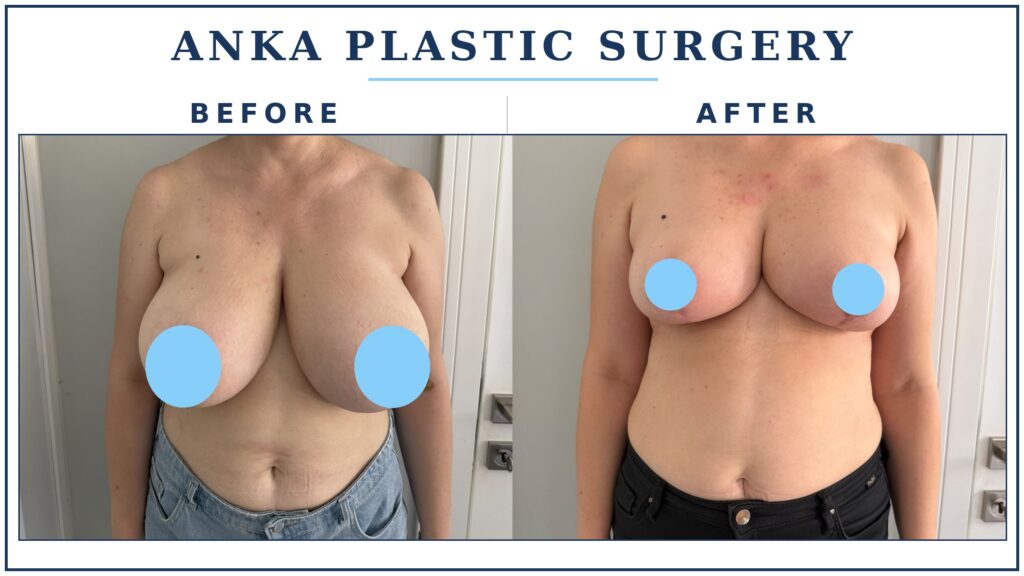
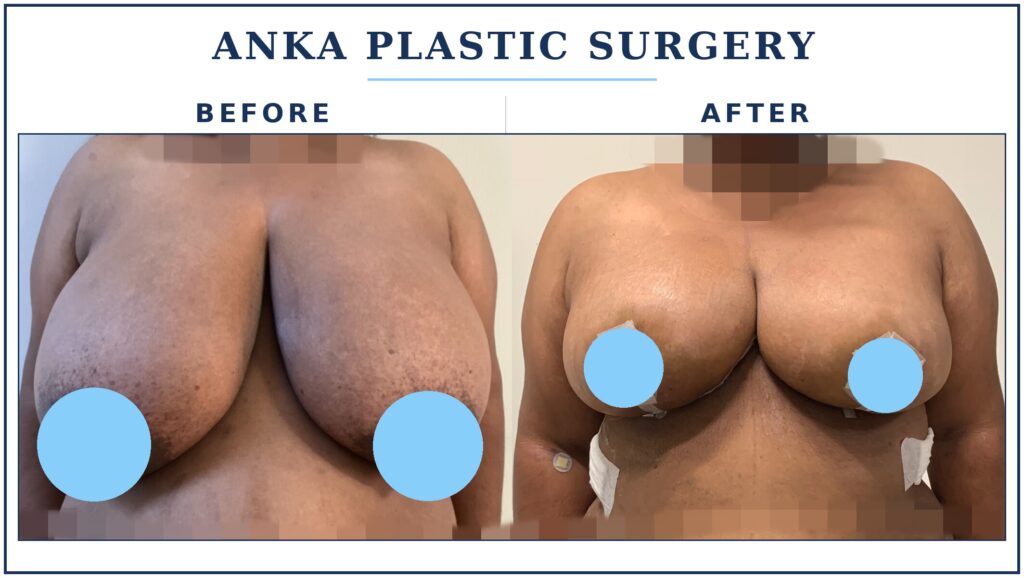
Breast reduction surgery, medically known as reduction mammaplasty, is a surgical procedure designed to relieve the physical discomfort caused by large and heavy breasts while creating a lighter, more balanced and proportionate breast shape.
Large breasts are not only an aesthetic concern. Common complaints include neck, shoulder and back pain, deep grooves caused by bra straps, skin irritation beneath the breasts, difficulty exercising and limitations in daily physical activity.
Breast Reduction at a Glance
- Anaesthesia: General anaesthesia
- Duration of surgery: Approximately 2.5–4 hours
- Hospital stay: Usually one night
- Return to desk-based work: Approximately 1 week
- Heavy exercise and weight training: Usually after 4–6 weeks
- Final result: Develops gradually over 3–12 months
- Minimum age: 18, once breast development is complete
Assoc. Prof. Anı Çinpolat’s Note
“For me, breast reduction surgery is not simply about how much tissue is removed. My aim is to create a breast that is lighter, naturally shaped, proportionate to the patient’s body and able to maintain its form as well as possible over the long term.”
Who Is a Good Candidate for Breast Reduction Surgery?
Breast reduction surgery may be considered if one or more of the following apply:
- Neck, shoulder or back pain
- Deep grooves on the shoulders caused by bra straps
- Recurrent rashes or skin irritation beneath the breasts
- Difficulty with exercise or daily activities
- Difficulty finding suitable clothing because of breast size
- Significant breast sagging
- Noticeable difference in volume between the breasts
- Reduced quality of life due to breast size
Breast size is always assessed together with general health, skin and breast tissue characteristics, degree of sagging and the patient’s expectations.
Who May Need to Wait or Consider Alternatives?
Surgery may not be suitable, or may need to be postponed, in the following situations:
- Currently smoking (smoking increases the risk of wound-healing problems and affects the blood supply to the nipple)
- Planning a pregnancy or breastfeeding in the near future
- Significant weight fluctuation or ongoing weight loss
- Medical conditions that are not well controlled
- Expectations that cannot realistically be met by surgery
These points are always discussed individually during consultation.
Our Approach to Breast Reduction Surgery
The goal of breast reduction is not only to reduce volume, but to preserve a natural breast shape and achieve proportions that suit the patient’s body. The most appropriate technique is selected according to each patient’s anatomy and the amount of reduction required.
One of the techniques we commonly use is the medial pedicle technique. In this method, the blood supply to the nipple-areola complex is preserved while the remaining breast tissue is reshaped.
About the Surgeon
Breast reduction surgery at Anka is performed by Assoc. Prof. Anı Çinpolat, MD, an EBOPRAS-certified plastic, reconstructive and aesthetic surgeon based in Istanbul, Turkey.
With a background in advanced reconstructive microsurgery and participation in Turkey’s first face, arm and uterus transplantations, her approach combines surgical precision with anatomical planning. The focus is not only on reducing size, but on restoring long-term balance, comfort and natural breast contour.
Each procedure is individually planned following a detailed clinical evaluation.
Which Techniques Are Used in Breast Reduction Surgery?
The technique is selected according to breast size, degree of sagging, the amount of tissue to be removed and the amount of excess skin.
Vertical (Lollipop) Breast Reduction
In addition to the incision around the areola, a vertical incision extends down towards the inframammary fold. In suitable patients, this technique allows both a reduction in breast volume and reshaping of the breast tissue.
Inverted-T (Anchor) Breast Reduction
This technique may be preferred for larger breasts with more significant sagging. In addition to the periareolar and vertical incisions, a horizontal incision is placed in the inframammary fold. It allows removal of a greater amount of breast tissue and excess skin when a more substantial reduction is required.
Free Nipple Graft
In very large and severely sagging breasts, a Free Nipple Graft may be necessary in selected patients. The nipple-areola complex is detached from its pedicle and repositioned as a graft at its new anatomical location.
This method allows greater reductions in selected cases, but it has disadvantages, including reduced or absent nipple sensation, loss of breastfeeding function and possible pigment changes. For this reason, it is used only when appropriate.
Assoc. Prof. Anı Çinpolat’s Note
“I do not choose the breast reduction technique simply according to the length of the scar. Safe reduction, preservation of the nipple blood supply and creation of a balanced breast shape that can maintain its form over time are more important.”
Preparing for Surgery
A detailed preparation plan is provided after your consultation. In general:
- Medical assessment: Your medical history, medications and general health are reviewed. Blood tests are usually required.
- Breast imaging: Patients over a certain age, or with relevant family history, may be asked to provide recent breast imaging such as a mammogram or ultrasound.
- Smoking and nicotine: Patients are advised to stop smoking and avoid nicotine products for the period recommended by the surgeon before and after surgery.
- Medications and supplements: Blood-thinning medicines, anti-inflammatory drugs and some herbal supplements may need to be stopped beforehand. Never stop prescribed medication without medical advice.
- Stable weight: Reaching a stable, healthy weight before surgery helps maintain the result.
- Practical planning: Arrange help at home for the first days and loose, front-opening clothing for after surgery.
How Is Breast Reduction Surgery Performed?
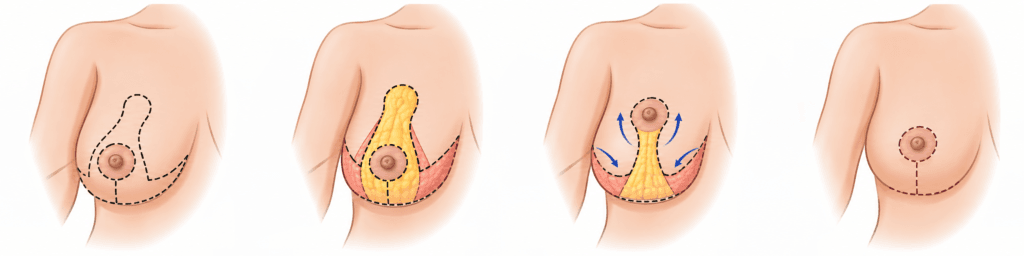
Breast reduction is performed under general anaesthesia and usually takes approximately 2.5–4 hours, depending on the extent of the procedure.
According to the preoperative markings, excess breast tissue, fat and skin are removed. The remaining tissue is reshaped, and the nipple and areola are repositioned according to the new breast form. Depending on the amount of reduction required and the patient’s anatomy, a vertical, inverted-T or, when necessary, Free Nipple Graft technique may be used.
At the end of surgery, the incisions are closed and a supportive surgical bra is applied. Temporary drains may be used in some patients. Patients usually stay in hospital overnight and are discharged the following day.
Recovery After Breast Reduction Surgery
Recovery varies according to the extent of the reduction and the individual characteristics of the patient.
First 24 Hours
Mild pain, tightness and swelling are expected. If drains are used, they are usually removed the following day.
First Week
Swelling and bruising are more noticeable during the first week. Short walks are encouraged, but heavy lifting and movements that strain the arms should be avoided. Many patients with desk-based jobs return to work in approximately 1 week.
Weeks 2–6
Swelling gradually decreases and patients return to most daily activities. Heavy exercise, weight training and intense chest muscle activity are generally postponed for 4–6 weeks.
Months 3–12
The breasts gradually settle into a more natural shape. Surgical scars soften and fade over time, and scar maturation may continue for up to one year.
Wearing the surgical bra for the recommended period and attending follow-up appointments are important parts of recovery.
Scar Care
Once the wounds have healed and your surgeon has approved it, silicone gel or silicone sheets may be recommended to support scar maturation. Protecting the scars from direct sun exposure is important during the first year. Scars cannot be removed entirely, but they usually become much paler and flatter over time.
Risks and Possible Complications
Breast reduction is a well-established operation, but like any surgery it carries risks. These may include:
- Bleeding or hematoma (collection of blood) requiring further treatment
- Infection
- Delayed wound healing, particularly at the junction of the incisions
- Noticeable or widened scars, including hypertrophic or keloid scarring
- Changes in nipple or breast sensation, which may be temporary or, less commonly, permanent
- Reduced blood supply to the nipple-areola complex, which in rare cases may affect part or all of the nipple
- Fat necrosis (firm areas within the breast)
- Asymmetry in shape, size or nipple position
- Reduced or lost ability to breastfeed
- Anaesthetic risks and, rarely, blood clots
- The possibility of a revision procedure
These risks, and how they are minimised, are explained in detail during consultation. Choosing an experienced surgeon, following pre- and post-operative instructions and not smoking all reduce the likelihood of complications.
Breast Reduction Surgery Prices
Our breast reduction packages start from £4,000. The package includes:
- Surgeon’s fee
- Hospital fees, including 1 night of hospital stay
- 6 nights of hotel accommodation
- Airport to hotel transfers (arrival and departure)
- Transfers between your hotel, the hospital and the clinic for surgery and follow-up check-ups
The final price depends on your individual surgical plan. It may change according to:
- The surgical technique used
- The extent of the reduction
- The complexity of the operation
- Any additional procedures required, such as a liposuction or other treatments
- Any extension to your hospital or hotel stay
For this reason, a fixed price cannot be given before consultation. During your consultation, your breast structure, expectations and general health are evaluated, and a personal treatment plan and written quotation are prepared. Your quotation will clearly show what is included.
Breast Surgery in Istanbul for UK Patients
If you are travelling from the UK for breast reduction surgery, our dedicated UK patient page provides practical information about surgical assessment, hospital care, recovery and follow-up after returning to the UK.
Frequently Asked Questions
Can I breastfeed after breast reduction surgery?
Breastfeeding potential may be preserved with pedicled techniques; however, it is not possible to guarantee that breastfeeding ability will be fully maintained in the future. Breastfeeding function is not preserved when a Free Nipple Graft is performed.
Can nipple sensation be lost after breast reduction surgery?
Temporary changes in nipple sensation may occur after surgery and often improve over time. Permanent loss of sensation is uncommon but possible. With a Free Nipple Graft, permanent loss of nipple sensation is expected.
Can breasts become larger again after breast reduction surgery?
The breast tissue removed during surgery does not grow back. However, weight gain, pregnancy, breastfeeding and hormonal changes may affect breast volume over time.
Is a breast lift also performed during breast reduction?
Yes. During breast reduction, excess tissue is removed while the remaining breast tissue is reshaped and the nipple is repositioned higher. Therefore, breast reduction also creates a lifting effect. For more detailed information, please visit our Breast Lift page.
What size will my breasts be after breast reduction?
The final size is planned together with you before surgery, based on your body proportions, anatomy and goals. Rather than promising a specific cup size, which varies between brands and countries, the aim is a proportionate result that relieves your symptoms and suits your frame.
Should I have breast reduction before or after pregnancy?
Breast reduction can be performed before pregnancy, but pregnancy, breastfeeding and weight changes may alter breast size and shape afterwards, and breastfeeding ability cannot be guaranteed. If you plan to have children soon, it is often reasonable to discuss postponing surgery. This is decided individually at consultation.
How visible will the scars be?
Scars depend on the technique used, skin type, healing characteristics and aftercare. They are initially red and firm, then soften and fade over 6–12 months or longer. They are placed to be as discreet as possible, but they are permanent.
From what age can breast reduction surgery be performed?
Breast reduction surgery may be considered from the age of 18, provided breast development is complete and the patient is medically suitable for surgery.
Is non-surgical breast reduction possible?
There is no non-surgical method that permanently reduces breast tissue. Weight loss may reduce breast volume in patients whose breasts contain a high proportion of fatty tissue, but it does not correct excess skin or significant sagging.
Does breast reduction surgery help with weight loss?
No. Breast reduction is not a weight-loss procedure. There may be a small reduction on the scale because breast tissue is removed, but the purpose of surgery is not weight loss.
Can men have breast reduction surgery?
Breast enlargement in men is referred to as gynaecomastia, and its treatment differs from breast reduction surgery in women. For more detailed information, please visit our Gynaecomastia page.
Does breast reduction surgery reduce the risk of breast cancer?
The purpose of breast reduction is not to prevent breast cancer. Some studies have reported a lower incidence of breast cancer in women who have had breast reduction, possibly because part of the breast tissue is removed. This should not replace regular breast screening, which remains important after surgery.
If I lose weight after breast reduction surgery, will my breasts become smaller?
Depending on the proportion of fatty tissue in the breasts, weight loss may lead to some further reduction in breast volume. Significant changes in body weight may also affect breast shape over time.
Can the areola be made smaller during breast reduction surgery?
Yes. In patients with enlarged areolae, the areolar diameter can be reduced during breast reduction surgery to better match the new breast shape.
If your breast size and shape are already satisfactory and your main concern is only the size of the areola or nipple, a separate procedure may be an option. Isolated areola reduction is usually performed under sedation and local anaesthesia, and most patients can go home on the same day. You can read more in our guide to nipple and areola reduction.
Is laser breast reduction possible?
No. There is currently no laser treatment with proven scientific effectiveness that can permanently reduce breast tissue. In patients who require a significant breast reduction, surgery remains the definitive treatment.
Book Your Consultation
Every breast reduction is planned individually after a detailed clinical evaluation. To discuss your symptoms, goals and the most suitable technique with Assoc. Prof. Anı Çinpolat, contact our team.