
Brow Lift Surgery in Turkey
Brow lift surgery is a surgical procedure designed to reposition eyebrows that have descended due to ageing, genetics or individual facial anatomy into a more appropriate and natural position.
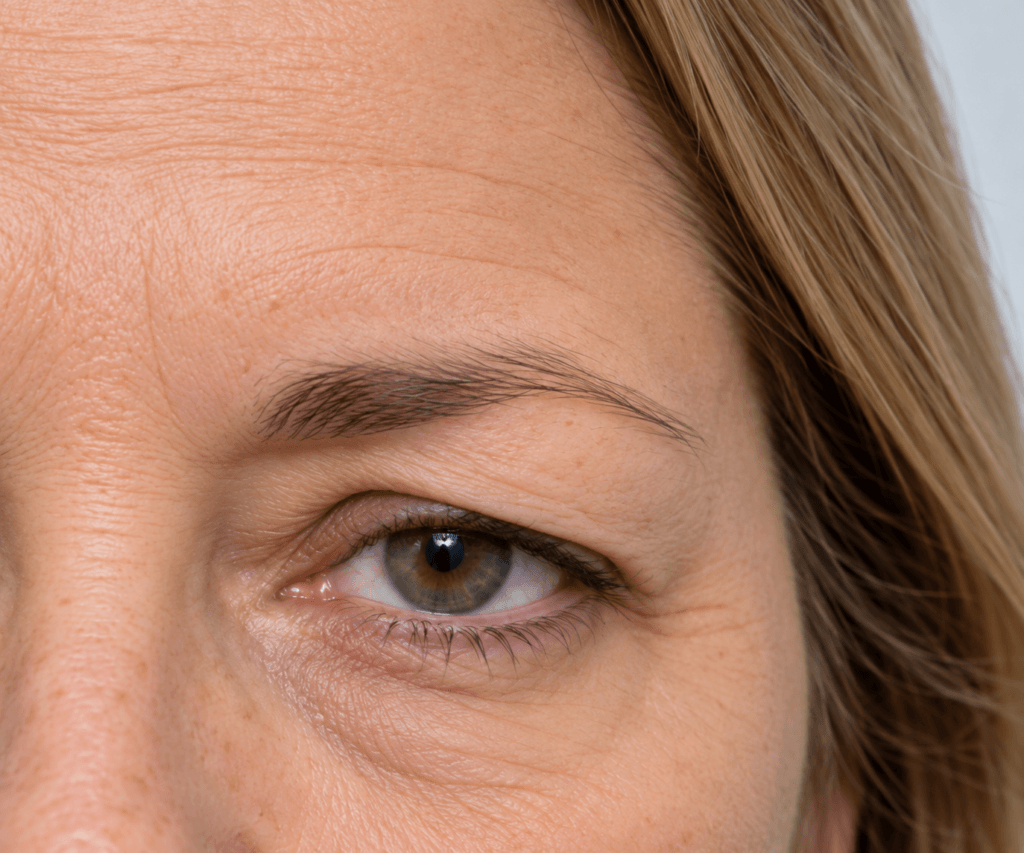
Brow ptosis does not only affect the appearance of the eyebrows themselves. In particular, when the outer part of the brow descends, excess upper eyelid skin may appear more prominent, giving the eye area a heavier or more tired appearance.
At Anka Plastic Surgery, we do not use a single standard brow lift technique for every patient. The degree of brow descent, hairline position, forehead anatomy, eye shape and any accompanying upper eyelid concerns are assessed together before the most appropriate surgical approach is selected.
Depending on the patient’s anatomy, brow lift surgery may be performed through small incisions within the scalp, through a direct incision just above the eyebrow, or through a hairline approach. In selected patients, brow lift surgery may also be combined with upper eyelid surgery or almond eye surgery.
What Is Brow Ptosis?
The natural position of the eyebrows varies from person to person.
With ageing, the soft tissues of the forehead and brow region may gradually descend. This can be particularly noticeable in the outer part of the eyebrow and may make the skin of the upper eyelid appear more redundant.
In some people, the eyebrows naturally sit in a lower position from a younger age.
Brow ptosis may contribute to:
- a feeling of heaviness in the upper eyelids,
- eyes appearing smaller,
- a tired or sad expression,
- a difference in height between the two eyebrows,
- upper eyelid skin excess appearing more prominent than it actually is.
Who May Be Suitable for Brow Lift Surgery?
Surgical brow lifting may be considered in patients whose brow position has a noticeable effect on their facial expression and who are seeking a longer-lasting correction.
In some patients, the main concern is brow descent alone. In others, excess upper eyelid skin, downward positioning of the outer corner of the eye or laxity of the forehead tissues may also be present.
For this reason, at Anka Plastic Surgery we do not assess brow lift surgery simply by looking at eyebrow height. The forehead and eye area are evaluated as a whole.
How Is Brow Lift Surgery Performed?
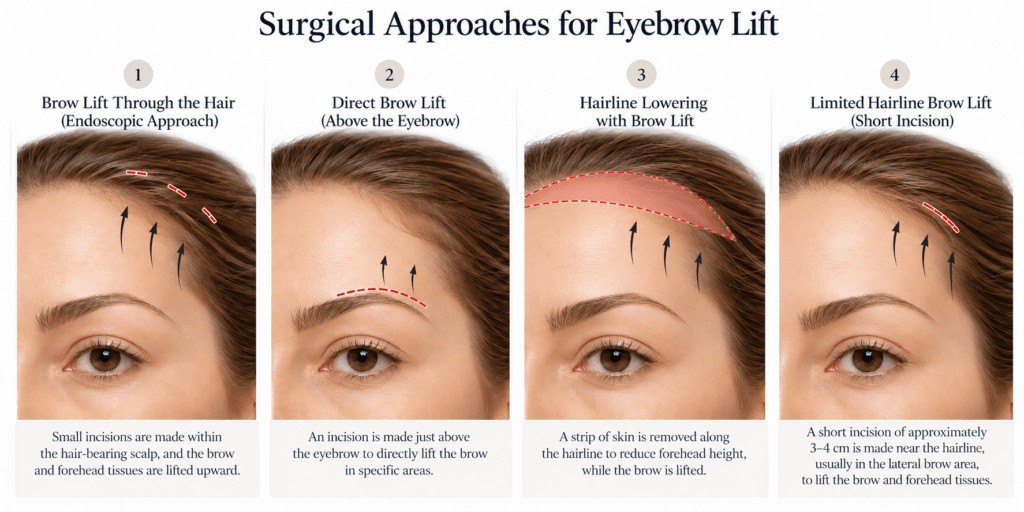
There are several surgical approaches to brow lifting. The technique is selected according to the patient’s anatomy and which part of the eyebrow or forehead needs to be repositioned.
Brow Lift Through the Scalp
In patients with a suitable hairline, small incisions can be placed within the scalp to reposition the brow and forehead tissues upwards.
One of the main advantages of this approach is that the incision lines can be concealed within the hair-bearing scalp.
It may be particularly suitable for selected patients with descent of the outer brow.
Direct Brow Lift Through an Incision Above the Eyebrow
In some patients, a direct incision immediately above the eyebrow may be preferred when more precise control of a particular part of the brow is required.
This approach allows direct control over brow height and shape. However, unlike scalp-based approaches, the incision is located along the upper border of the eyebrow.
Skin characteristics, eyebrow density and the patient’s tendency to form visible scars therefore need to be assessed carefully.
This method is not used routinely in every patient, but it can be appropriate in selected patients with significant and localised brow ptosis.
Forehead Reduction and Brow Lift with Skin Excision Along the Hairline
In patients with a high or broad forehead who also have brow descent, forehead reduction and brow lift surgerymay be combined through an incision placed along the hairline.
With this technique, a strip of excess skin is removed along the hairline to reduce forehead height, while the brow and forehead tissues can also be repositioned upwards.
In patients with a high hairline or wide forehead, the proportions of the upper third of the face should be considered rather than focusing only on eyebrow height. In suitable patients, this approach can therefore address both brow position and excessive forehead height within the same operation.
The main disadvantage is that the incision is positioned along the hairline rather than within the scalp. Hairline characteristics, skin quality and the patient’s scar-healing tendency are therefore important considerations when selecting this technique.
Brow Lift Through the Hairline
In some patients, the incision can be positioned close to the hairline.
This approach may allow the brow and forehead tissues to be repositioned across a broader area. Hairline position, forehead height and overall facial anatomy are important factors when considering this technique.
Can Brow Lift and Almond Eye Surgery Be Performed Together?
Yes.
In some patients, repositioning the eyebrow alone may not create the desired relationship around the eyes. The outer corner of the eye may also need to be positioned slightly higher or given a subtle upward inclination.
In suitable patients, almond eye surgery can therefore be planned together with brow lift surgery during the same operation.
The aim is not simply to raise the eyebrow and outer corner of the eye independently, but to create a more harmonious relationship between these structures and the overall facial anatomy.
Almond eye surgery is not necessary for every brow lift patient. The decision depends on the patient’s eye anatomy and aesthetic goals.
Can Brow Lift and Upper Eyelid Surgery Be Performed Together?
Yes.
Some of the apparent excess skin in the upper eyelid may actually result from downward displacement of the eyebrow rather than from the eyelid itself.
In these patients, performing upper blepharoplasty alone may not fully address the underlying cause of the heavy appearance around the eyes.
Once the brow position has been corrected, the amount of genuinely excess upper eyelid skin can be assessed separately and removed when necessary.
For this reason, brow position is routinely assessed when planning upper eyelid surgery at Anka Plastic Surgery.
Is a Botox Brow Lift the Same as a Surgical Brow Lift?
No.
With botulinum toxin treatment, the activity of certain muscles that pull the brow downwards is reduced, allowing the muscles that elevate the brow to have a relatively greater effect.
This may produce a limited degree of elevation in patients with mild brow ptosis.
In surgical brow lifting, however, the tissues are physically repositioned. Therefore, in patients with significant brow descent, surgery and botulinum toxin do not produce the same degree or type of correction.
Can Dermal Fillers Lift the Eyebrows?
In some patients, volume loss beneath the eyebrow can make the brow appear less supported or lower in position.
In these cases, carefully placed hyaluronic acid filler may provide additional support and improve the contour around the eyebrow.
However, filler does not surgically reposition genuinely descended brow tissue.
When the main problem is true tissue descent, a surgical approach may therefore be more appropriate.
What Is an Endoscopic Brow Lift?
An endoscopic brow lift is one of the surgical techniques in which the forehead and brow tissues are released and repositioned using a camera through small incisions made within the scalp.
This technique may be appropriate for selected patients.
At Anka Plastic Surgery, brow lift surgery is not classified simply as “endoscopic” or “non-endoscopic”.
The more important consideration is which access point, dissection technique and lifting vector are most appropriate for the patient’s individual anatomy.
Does Brow Lift Surgery Change the Shape of the Eyebrows?
Yes, to some extent.
However, the aim is not to raise the eyebrows as high as possible.
The inner, middle and outer portions of the eyebrow do not necessarily need to be elevated by the same amount. Controlled elevation of the outer brow, in particular, may contribute to a more open and rested appearance around the eyes.
Excessive elevation of the entire eyebrow, on the other hand, may create an unnatural or permanently surprised expression.
For this reason, the lifting vector, meaning the direction in which the tissue is repositioned, is just as important as the amount of elevation.
Can Brow Asymmetry Be Corrected?
Mild brow asymmetry is very common.
One eyebrow may naturally sit higher than the other, or the two eyebrows may have slightly different shapes.
Significant asymmetries can often be reduced during surgery. However, making both eyebrows mathematically identical is neither always possible nor necessarily desirable for a natural appearance.
The aim is to reduce noticeable differences and achieve better harmony with the overall balance of the face.
Will There Be Scars After Brow Lift Surgery?
Every surgical incision leaves some degree of scar. The location and visibility of the scar depend on the technique used.
With scalp-based approaches, the incisions are concealed within the hair.
Hairline incisions are positioned along the natural transition between the forehead and scalp.
With a direct brow lift, the scar is located along the upper border of the eyebrow, which makes careful patient selection particularly important.
Over time, surgical scars generally mature and become less noticeable.
Recovery After Brow Lift Surgery
Recovery varies according to the surgical technique used.
During the first few days, patients may experience:
- swelling,
- bruising,
- tightness around the forehead and eyebrows,
- temporary numbness or sensitivity.
As the swelling subsides, the eyebrows gradually settle into their new position. Incisions within the scalp or along the hairline also tend to become less noticeable as healing progresses.
What Are the Risks of Brow Lift Surgery?
As with any surgical procedure, brow lift surgery carries certain risks.
These may include:
- bleeding,
- infection,
- noticeable scarring,
- temporary or, rarely, persistent changes in sensation,
- hair loss around scalp incisions,
- brow asymmetry,
- insufficient elevation,
- excessive elevation,
- some degree of recurrent brow descent over time.
During brow lift surgery, particular attention must also be paid to preserving the branches of the facial nerve responsible for forehead and eyebrow movement.
Is Brow Lift Surgery Permanent?
Surgical brow lifting provides long-lasting repositioning, but it does not stop the ageing process.
Over time, some degree of laxity may redevelop in the forehead and facial tissues. It would therefore not be realistic to say that the result will remain completely unchanged throughout life.
Nevertheless, unlike temporary treatments such as botulinum toxin or fillers, surgical brow lifting physically repositions the tissues.
Our Approach to Brow Lift Surgery
At Anka Plastic Surgery, we do not use the same brow lift technique for every patient.
When planning surgery, we assess the degree of brow descent, hairline position, forehead height, eye shape, existing asymmetry and any accompanying upper eyelid concerns together.
In some patients, small incisions within the scalp may be sufficient, while in others a direct brow approach, hairline approach or combined forehead reduction may be more appropriate. In suitable patients, brow lift surgery can also be combined with upper eyelid surgery or almond eye surgery.
Our priority is not to apply one particular technique to every patient, but to select the lifting vector and surgical approach that best suit the patient’s anatomy.
The aim is not to elevate the eyebrows as much as possible, but to create a more open, balanced and rested appearance around the eyes while preserving the patient’s natural facial expression.
Conclusion
Brow lift surgery can be used to correct brow descent and reduce a heavy appearance around the eyes.
Depending on the patient’s anatomy, surgery may be performed through incisions within the scalp, along the hairline or directly above the eyebrow. In selected patients with a high or broad forehead, forehead reduction and brow lifting can also be combined.
For some patients, brow lift surgery alone is sufficient, while in others it may be combined with upper eyelid surgery or almond eye surgery.
The most appropriate technique is determined according to the patient’s brow position, eye shape, hairline, forehead anatomy and aesthetic goals.