Rhinoplasty in Turkey
Assoc. Prof. Dr. Gamze Bektas – Anka Plastic Surgery, Nişantaşı, Istanbul


Rhinoplasty is not simply about making the nose smaller or changing its shape. The nose sits at the centre of the face and plays an important role in both facial balance and breathing.
At Anka Plastic Surgery in Nişantaşı, Istanbul, rhinoplasty is planned individually according to facial proportions, nasal anatomy, skin thickness, cartilage structure and, when necessary, functional breathing problems. Our aim is not to create the same nose for every patient. We aim for a nose that looks balanced within the face, preserves the individual character of the patient and has a stable structural foundation.
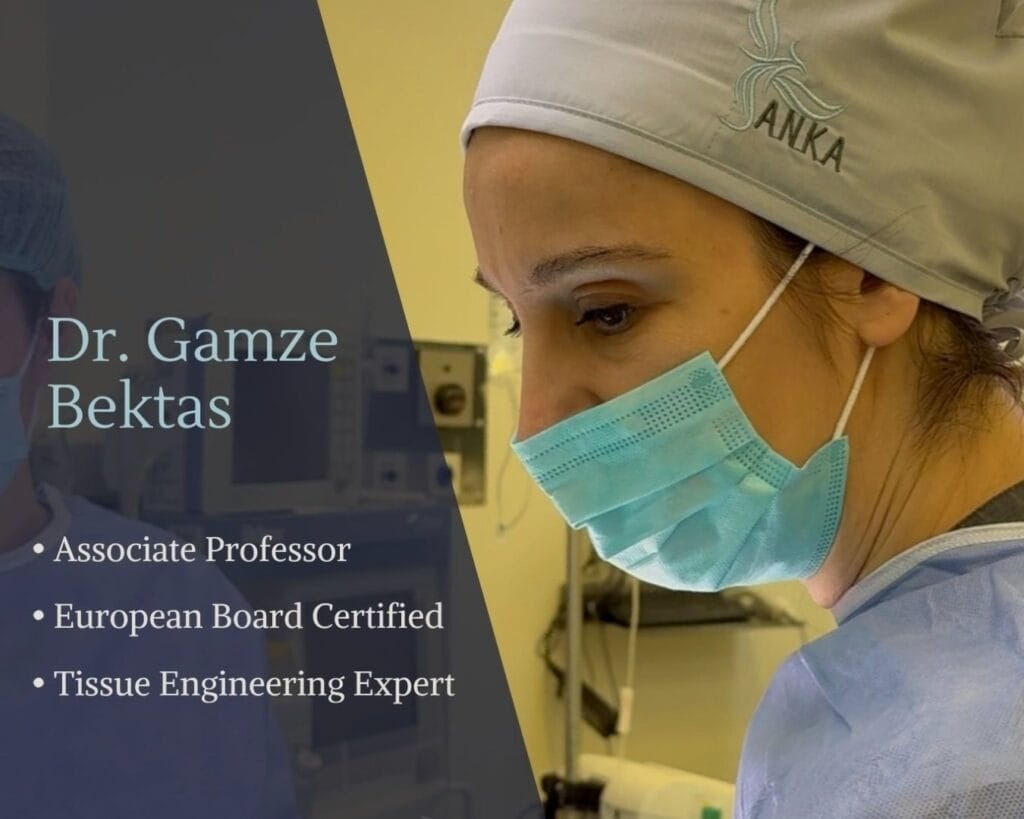
Rhinoplasty at Anka Plastic Surgery is performed by Assoc. Prof. Dr. Gamze Bektas, a plastic, reconstructive and aesthetic surgeon and European Board-certified (EBOPRAS) specialist.
Rhinoplasty at a Glance
- Price: Rhinoplasty packages start from £3,500.
- Anaesthesia: General anaesthesia
- Duration of surgery: Around 2.5–3.5 hours for a primary open rhinoplasty (longer for complex revision cases)
- Hospital stay: One night
- Stay in Istanbul: Approximately 7 nights
- External splint removed: Around day 7
- Return to ordinary social activities: Gradually over the first few weeks
- Final result: Takes approximately one year, longer for thick-skinned noses and revision cases
What Is Rhinoplasty?
Rhinoplasty, commonly referred to as a nose job, is surgery performed to change the shape, proportions or structure of the nose. Depending on your anatomy and concerns, it may involve correction of:
- A prominent nasal hump
- A wide or asymmetric nose
- A drooping or broad nasal tip
- Nasal deviation
- Disproportion between the nose and other facial features
- Structural problems following previous surgery
- Breathing difficulties associated with septal deviation or other internal nasal problems
For some patients, the main concern is appearance. For others, aesthetic and functional problems coexist. A comprehensive assessment should therefore consider both the external appearance of the nose and its internal structure.
A Natural Approach
There is no single ideal nose shape that suits every face. Facial width, forehead, cheekbones, lips, chin projection, skin thickness and your existing nasal anatomy all influence surgical planning.
The surgical plan is designed around your own facial proportions, not an obviously operated or standardised appearance. A successful result should make the nose feel more harmonious with the rest of the face rather than drawing attention to the operation itself.
Your Rhinoplasty Surgeon: Assoc. Prof. Dr. Gamze Bektas
Assoc. Prof. Bektas is a plastic, reconstructive and aesthetic surgeon with an academic background combining clinical surgery, reconstructive principles and tissue biology.
- Associate Professor of Plastic, Reconstructive and Aesthetic Surgery
- European Board Certified (EBOPRAS)
- Academic and scientific background in tissue engineering
- Experience in aesthetic and reconstructive facial surgery
- Individualised planning for primary and revision rhinoplasty
Her approach focuses on maintaining structural support while refining the areas that create imbalance. This matters because the long-term result depends not only on how the nose looks immediately after surgery, but also on how the cartilage, bone and soft tissues heal over time.
Your rhinoplasty is performed by Assoc. Prof. Bektas herself, rather than by a surgeon assigned to you after you arrive.
Who Is a Good Candidate for Rhinoplasty?
Rhinoplasty may be suitable if you:
- Are bothered by the shape, size, proportions or symmetry of your nose
- Have a nasal hump, a wide or drooping tip, or a deviated nose
- Have difficulty breathing through your nose because of structural problems
- Have had previous nose surgery and still have aesthetic, structural or breathing concerns
- Are in good general health and have realistic expectations
Who May Need to Wait or Consider Alternatives?
The timing of surgery, or the choice of procedure, may need to be reconsidered in the following situations:
- Facial growth that is not yet complete
- Currently smoking, because nicotine affects healing
- Medical conditions that are not well controlled
- Expectations that cannot realistically be met by surgery
These points are always discussed individually during consultation.
Techniques We Use
The choice between surgical techniques is always based on your anatomy.
Open Rhinoplasty
When detailed structural work is required, Assoc. Prof. Bektas primarily uses an open approach. The underlying cartilage and bony framework can be seen directly during surgery, allowing precise assessment and correction of the tip cartilages, asymmetry, structural support, nasal deviation and cartilage graft positioning. This is particularly valuable when significant reshaping, structural reinforcement or revision surgery is required.
Piezo Ultrasonic Rhinoplasty
When the nasal bones need to be reshaped, piezoelectric ultrasonic instruments may be used. Piezo devices cut and reshape bone using ultrasonic energy and are designed to work selectively on mineralised tissue. This allows precise bony modifications while limiting unnecessary trauma to the surrounding soft tissues.
Piezo technology does not eliminate swelling or bruising completely, and every patient heals differently. It is a surgical instrument rather than a different operation, and the quality of the result still depends primarily on diagnosis, planning, surgical technique and healing.
Septorhinoplasty: Rhinoplasty and Breathing
Aesthetic rhinoplasty and functional nasal surgery are not always separate issues. Some patients also have septal deviation, nasal airway narrowing, enlarged turbinates or structural asymmetry affecting airflow. When appropriate, these problems can be addressed during the same operation. This combined approach is called septorhinoplasty. The aim is to improve nasal shape while preserving, and where possible improving, nasal function.
Types of Rhinoplasty We Perform
Primary Rhinoplasty
Surgery on a nose that has not previously undergone rhinoplasty. It is planned according to your existing anatomy and may involve the nasal bridge, tip, septum, nasal bones or a combination of these structures.
Tip Rhinoplasty
Some patients are satisfied with the nasal bridge but are concerned about the shape, width, projection or position of the tip. In selected patients, surgery can be concentrated on the cartilage of the nasal tip (tip rhinoplasty, or tipplasty). Because every nasal tip has a different cartilage structure, the amount and type of reshaping varies considerably between patients.
Preservation Rhinoplasty and the Letdown Technique
In selected patients with suitable anatomy, a preservation approach may be considered. One such technique is the letdown technique, which aims to reduce dorsal height while preserving more of the natural bridge anatomy rather than removing the entire dorsal structure. It is not appropriate for every patient: the decision depends on the degree of hump, deviation and the underlying anatomy.
Revision Rhinoplasty
Revision rhinoplasty is performed when a patient has previously had one or more nose operations but continues to have aesthetic, structural or breathing-related concerns. It is generally more complex than primary rhinoplasty because the original anatomy may have been altered and scar tissue may be present.
In some revision cases there is insufficient cartilage remaining inside the nose. When additional structural support is required, cartilage grafts may be taken from your own tissues. In more complex cases, costal (rib) cartilage may be used to reconstruct and reinforce the nasal framework. The goal is not simply to reshape the nose again, but when necessary to rebuild a stable structure.
Male Rhinoplasty
Male rhinoplasty is also planned according to the individual face rather than a fixed template. In many male patients, keeping a relatively strong nasal profile and avoiding excessive rotation or an overly scooped bridge helps preserve facial character. However, there is no single “male nose”: facial proportions, ethnic background, chin projection, skin thickness and personal goals all influence planning.
Thick and Thin Skin
Skin thickness has an important influence on both surgical planning and recovery.
- Thick skin tends to retain swelling for longer and may mask very subtle cartilage details. The underlying cartilage framework may need stronger definition and support, and the final refinement of the tip takes longer.
- Thin skin reveals the underlying bone and cartilage framework more easily, so even very small irregularities may become visible. Surgical precision and smooth contouring are particularly important.
Neither is automatically “better” for rhinoplasty. They simply require different planning.
Preparing for Surgery
Before surgery, Assoc. Prof. Bektas evaluates the nose from both aesthetic and functional perspectives. Standardised photographs are taken and your goals are discussed in detail.
Digital simulation may be used to help communicate possible changes. A simulation is not a guarantee of the final result. Its purpose is to help the surgeon and patient discuss proportions, preferences and realistic expectations using the same visual reference.
In general:
- Online assessment: For international patients, the initial assessment can usually begin remotely using photographs and medical information before travelling to Istanbul.
- Medical assessment: Your medical history, medications and general health are reviewed, and any required tests are completed before the procedure.
- Smoking and nicotine: Patients are advised to stop smoking and avoid nicotine products for the period recommended by the surgeon before and after surgery.
- Medications and supplements: Blood-thinning medicines, anti-inflammatory drugs and some herbal supplements may need to be stopped beforehand. Never stop prescribed medication without medical advice
Rhinoplasty Recovery
Recovery after rhinoplasty is gradual.
First Few Days
Swelling and nasal congestion are expected. Silicone internal splints, when used, are generally removed within the first few days according to the surgical plan. Discomfort is usually managed with prescribed medication.
Around One Week
The external nasal splint is commonly removed at approximately one week. You will see a major change at this point, but it is not the final result. Many international patients can return home after their postoperative examination at this stage, provided recovery is uncomplicated and Assoc. Prof. Bektas considers them fit to travel.
First Few Weeks
Bruising, when present, usually improves progressively. Most patients can gradually return to ordinary social activities, although some swelling remains. The nose should still be protected from pressure and accidental trauma.
First Months
A considerable amount of swelling decreases during the first few months, but the nose continues to change gradually. The nasal tip generally takes longer to settle than the bridge.
Final Result
The final result should not be judged after a few weeks. Fine swelling and tissue remodelling continue for many months. For many patients, maturation takes approximately one year, while thicker-skinned noses and revision cases may continue to refine for longer.
Risks of Rhinoplasty
Rhinoplasty is performed under general anaesthesia and, like all operations, has potential risks. These may include:
- Bleeding
- Infection
- Prolonged swelling
- Asymmetry
- Contour irregularities
- Scar-related changes
- Temporary or persistent changes in sensation
- Breathing problems
- Anaesthetic risks
- The need for additional surgery
Careful patient selection, detailed surgical planning, appropriate hospital conditions and postoperative follow-up are important parts of reducing avoidable risk. No surgeon can guarantee an exact aesthetic result.
Choosing Where to Have Rhinoplasty
Turkey has become a major destination for international patients seeking plastic surgery, and Istanbul is easily accessible from the UK and many European countries. However, the choice should not be based on the country or price alone. More important considerations include:
- Who will actually perform the operation
- The surgeon’s qualifications
- Whether the procedure is performed in a fully equipped hospital
- How the surgeon approaches functional as well as aesthetic problems
- What postoperative follow-up is provided
- Who will assist you if you have questions during recovery
At Anka Plastic Surgery, the international patient pathway is organised around these points rather than around surgery alone. International patients also stay close to our clinic in Nişantaşı during the first postoperative week, which makes scheduled examinations and communication easier.
Rhinoplasty Cost in Turkey
Depending on the agreed package, international patient arrangements may include:
- Surgeon’s fee
- Hospital and operating theatre costs
- General anaesthesia
- One-night hospital stay
- Preoperative assessment
- Postoperative clinical examinations
- Accommodation in Istanbul
- Airport transfers
- Hotel, hospital and clinic transfers
- Coordination throughout your stay
Our rhinoplasty packages for international patients start from £3500. A detailed quotation is provided before you travel so that the included services are clear. The final price depends on your individual surgical plan, for example whether septal surgery, rib cartilage grafting or revision work is needed.
Your 7-Night Rhinoplasty Journey in Istanbul
We usually organise the international patient pathway so that the first postoperative week takes place in Istanbul.
- Arrival: Our transfer team collects you from the airport and takes you to your hotel.
- Preoperative consultation: You meet Assoc. Prof. Bektas in person. The nose is examined, photographs and planning are reviewed, and any remaining questions are discussed before the operation.
- Surgery: Rhinoplasty is performed under general anaesthesia in one of the private hospitals with which we work. Patients generally remain in hospital for one night.
- Recovery in Nişantaşı: Accommodation is arranged close to the clinic. Our current international patient programme includes accommodation at Ramada Plaza, approximately an eight-minute walk from Anka Plastic Surgery.
- Follow-up: Our team remains available through the clinic’s WhatsApp line during your stay. Scheduled postoperative examinations are performed by our clinical team and Assoc. Prof. Bektas.
- Before returning home: At approximately one week, the external splint is generally removed and the nose is examined. If recovery is progressing normally and you are medically fit to travel, you can return home. Long-term follow-up continues after you leave Istanbul.
For a step-by-step guide to transfers, hospital stay and appointments, read our Surgery Journey in Istanbul guide.
Rhinoplasty Consultation for International Patients
You do not need to travel to Istanbul simply to find out whether you may be suitable for rhinoplasty. The process can begin with an online preliminary assessment. You can send our patient coordinators:
- Clear photographs of your nose from the requested angles
- Information about any previous nasal surgery
- Details of breathing problems
- Relevant medical history
- A brief description of what you would like to change
Assoc. Prof. Bektas can then review the information before your trip and determine whether an in-person consultation and surgical planning would be appropriate.
Frequently Asked Questions
How long does rhinoplasty surgery take?
A primary open rhinoplasty commonly takes around 2.5 to 3.5 hours, although surgical time varies according to the anatomy and procedures required. Complex revision rhinoplasty, particularly when rib cartilage is needed, may take longer.
Is rhinoplasty painful?
Patients commonly describe congestion, pressure and swelling rather than severe pain. Postoperative discomfort varies between individuals and is treated with appropriate medication.
How long should I stay in Turkey after rhinoplasty?
For international patients, we generally plan approximately seven nights in Istanbul so that the early postoperative period and first major follow-up can take place before return travel. The exact travel date depends on individual recovery.
Will I have visible scars?
In open rhinoplasty, a small incision is made across the columella (the skin between the nostrils), in addition to incisions inside the nose. This scar usually heals very discreetly, but its appearance varies between patients.
Can breathing problems be corrected during rhinoplasty?
Yes. When nasal obstruction is caused by structural problems such as septal deviation or other correctable anatomical abnormalities, functional treatment can be performed during the same operation.
Can I have rhinoplasty if I previously had nose surgery?
Possibly. Revision rhinoplasty requires assessment of the existing cartilage, skin, scar tissue and nasal airway. In some cases additional cartilage grafting, including rib cartilage, may be required.
Will my nose look natural after rhinoplasty?
Natural appearance is one of our main planning goals, but “natural” does not mean the same shape for every patient. The aim is to create proportions that work with your individual facial anatomy rather than imposing a standardised nose.
When can I exercise after rhinoplasty?
Light walking can usually begin relatively early in recovery. More strenuous cardiovascular exercise, weight training and activities that significantly increase blood pressure should be resumed gradually according to your surgeon’s instructions. Contact sports and activities with a risk of impact to the nose require a longer period of restriction. The exact timetable depends on what was performed during surgery and how healing progresses.
When can I wear glasses after rhinoplasty?
When the nasal bones have been surgically reshaped, pressure from glasses during early healing may be undesirable. You may be advised to avoid resting glasses directly on the nasal bridge for several weeks. Assoc. Prof. Bektas gives individual instructions according to the type of surgery performed and the stability of the nasal bones.
Is rhinoplasty permanent?
The structural changes made during rhinoplasty are intended to be long-lasting. However, the nose remains living tissue and continues to change naturally with healing and ageing. No responsible surgeon should promise that a nose will remain completely unchanged for life.
Book Your Consultation
Every rhinoplasty is planned individually after a detailed assessment of your nose from both aesthetic and functional perspectives. To find out whether rhinoplasty is right for you, contact our team.