
How Do Thyroid Disorders Affect the Skin? Thyroid and Skin Problems
Thyroid disorders do not only affect metabolism. They can also have a significant impact on the skin, hair, and nails.
People with Hashimoto’s thyroiditis or hypothyroidism commonly experience skin-related symptoms such as:
- Dry skin
- Dull complexion
- Loss of skin elasticity
- Fine wrinkles becoming more noticeable
- Mild facial puffiness
- Sensitive and easily irritated skin
Many patients continue to ask the same question even after their thyroid hormone levels have returned to normal:
“My blood tests are normal. Why does my skin still look dry and tired?”
Why Does Thyroid Disease Affect the Skin?
Thyroid hormones play an important role in regulating:
- skin cell turnover,
- fibroblast activity,
- collagen production,
- the skin’s ability to retain moisture,
- sebum production,
- and microcirculation.
For this reason, people with hypothyroidism may develop:
- dry skin,
- a dull complexion,
- reduced skin elasticity,
- slower wound healing.
In autoimmune thyroid diseases such as Hashimoto’s thyroiditis, some patients may continue to experience changes in skin quality even after thyroid hormone levels have been normalized. Ongoing immune activity and individual biological differences may contribute to these persistent skin changes.
As a result, skin aging is not limited to wrinkles alone. Skin hydration, elasticity, and overall skin quality may also be affected.
Can Thyroid Disease Cause Dry Skin or Skin Spots?
One of the most common online searches is:
“Can thyroid disease cause skin spots?”
Thyroid disorders do not directly cause skin pigmentation or dark spots. However, impaired skin barrier function and persistent dryness may make the skin more sensitive. In some autoimmune conditions associated with thyroid disease, pigmentary changes may also occur.
Similarly, thyroid skin problems are not limited to pigmentation alone. Dryness, dullness, reduced elasticity, and increased skin sensitivity are among the most common concerns.
Why Should Skin Rejuvenation Be Planned Differently in Thyroid Patients?
Every patient’s skin responds differently.
For this reason, skin rejuvenation in patients with thyroid disease should be individualized rather than following a standard treatment protocol.
The primary goals are to:
- improve skin quality,
- stimulate collagen production,
- support the skin’s natural regenerative capacity,
- rather than simply adding facial volume.
Which Skin Rejuvenation Treatments May Be Suitable?
Treatment planning should take into account:
- skin dryness,
- loss of elasticity,
- facial volume deficiency,
- the patient’s age,
- and whether the thyroid disorder is well controlled.
Depending on the individual’s needs, treatment options may include:
- hyaluronic acid skin boosters,
- platelet-rich plasma (PRP),
- exosome therapy,
- microneedling,
- fractional laser treatments,
- HIFU,
- and, when appropriate, hyaluronic acid dermal fillers.
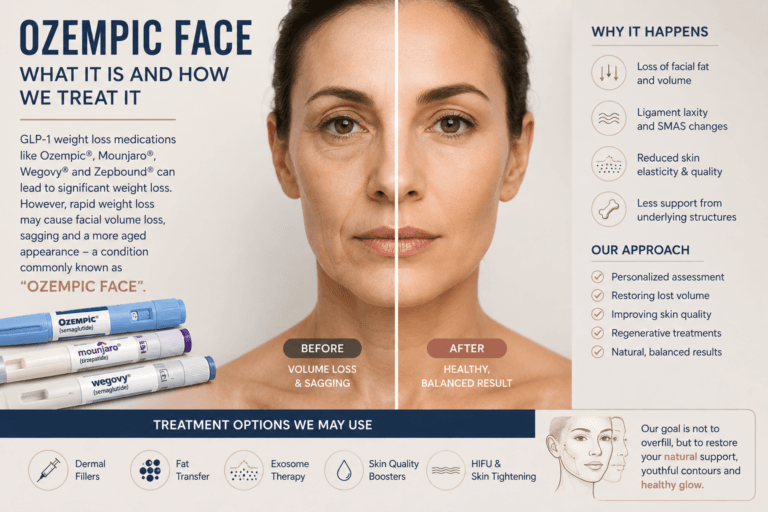
The goal is not to overfill the face, but to improve the biological quality of the skin and achieve natural, long-lasting rejuvenation.
Can Patients with Thyroid Disease Have Dermal Fillers?
Yes.
Hyaluronic acid fillers are not contraindicated simply because a patient has thyroid disease.
When the thyroid condition is well controlled and there is an appropriate indication, dermal fillers can be safely performed using the correct product and injection technique.
However, fillers should not be considered the only solution for skin rejuvenation. In many patients, combining fillers with regenerative treatments provides more balanced and natural-looking results.
The Importance of Nutrition and Lifestyle
Healthy skin depends on more than aesthetic treatments alone.
Adequate protein intake, correction of vitamin and mineral deficiencies, quality sleep, smoking cessation, and sun protection all contribute to healthier skin.
For patients with Hashimoto’s thyroiditis, nutritional recommendations should always be individualized in collaboration with an endocrinologist and a qualified nutrition professional.
Conclusion
Thyroid disorders can affect the skin in many different ways. Dry skin, loss of elasticity, and a dull complexion are among the most common concerns. Even when thyroid hormone levels are well controlled, some patients may continue to experience changes in skin quality.
For this reason, skin rejuvenation in patients with thyroid disease should always be personalized. Treatment planning should consider the patient’s skin quality, thyroid status, and aesthetic goals rather than relying on a standard protocol.
The ultimate goal is not simply to reduce wrinkles, but to improve skin quality, restore a healthy appearance, and achieve natural, long-lasting results.
For more detailed information about PRP, exosome therapy, microneedling, HIFU, and similar treatments used to support skin quality, you can visit our Nonsurgical Treatments page.