
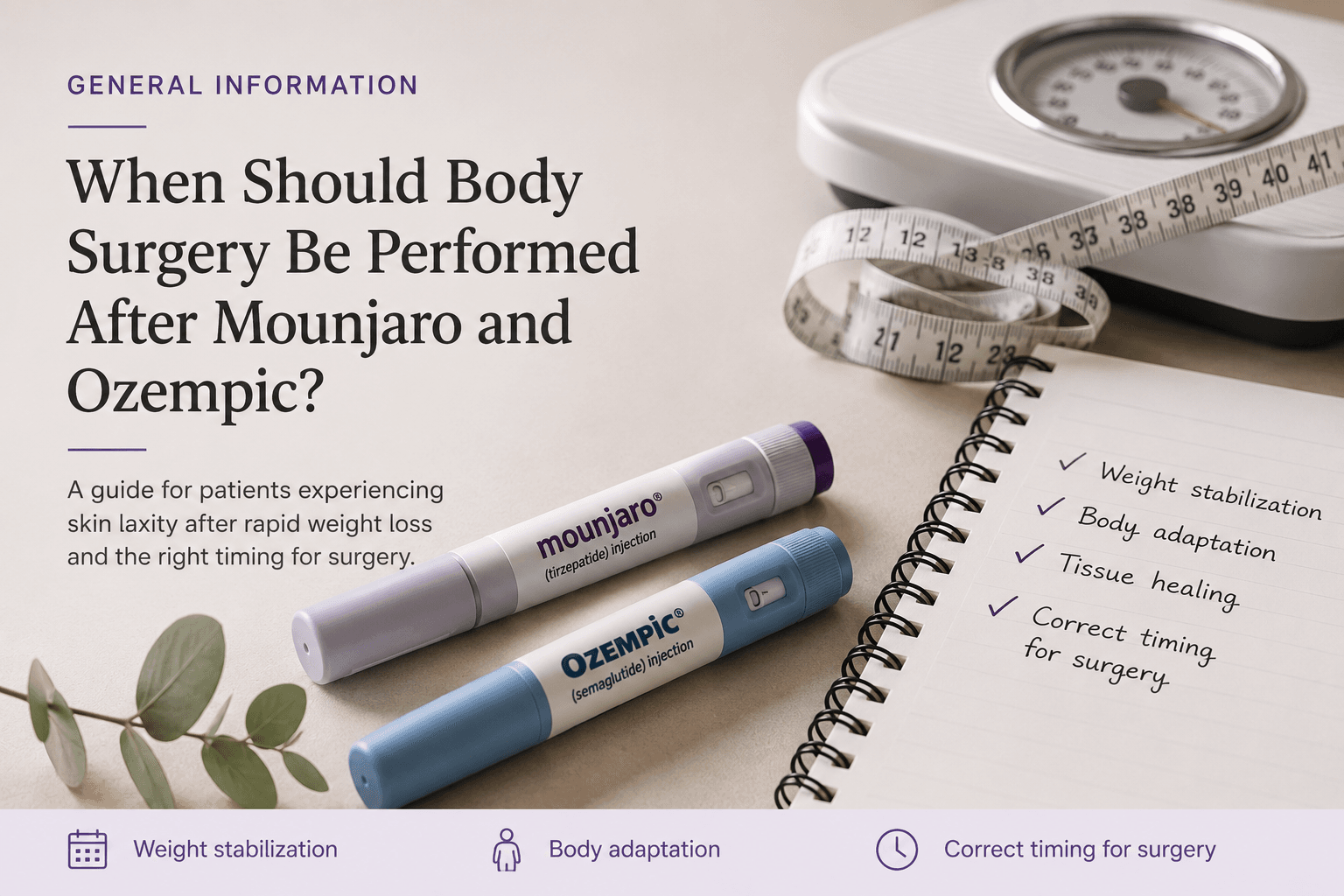
When Should Body Surgery Be Performed After Mounjaro and Ozempic?
In recent years, GLP-1 receptor agonists used for weight loss, particularly Mounjaro® (tirzepatide) and Ozempic® (semaglutide), have helped many people achieve significant weight reduction.
These medications can provide substantial health benefits for individuals with obesity or excess weight. However, after rapid or substantial weight loss, the body’s soft tissues do not always adapt to the new body volume.
As a result, patients may develop:
- Loose skin around the abdomen
- Excess skin on the upper arms
- Loss of breast volume with breast sagging
- Loose skin of the thighs
- Changes in overall body contour
This is not only a cosmetic concern. In some patients, excess skin may cause discomfort during daily activities, make clothing choices more difficult, and reduce overall quality of life.
Why Does Loose Skin Develop After Weight Loss Injections?
During weight loss, the body loses fat tissue, but the skin does not always shrink at the same rate, especially after rapid or significant weight reduction.
Skin elasticity is influenced by several factors, including:
- Age
- Genetics
- Amount of weight lost
- Speed of weight loss
- Previous pregnancies
Patients who lose 20 to 30 kilograms (44 to 66 pounds) or more often develop excess skin that cannot be corrected with exercise or non-surgical skin treatments alone.
In these cases, body contouring procedures such as abdominoplasty (tummy tuck), arm lift (brachioplasty), breast lift (mastopexy), or thigh lift may become appropriate treatment options.
When Is the Right Time for Body Contouring Surgery After Mounjaro or Ozempic?
One of the most important factors in post-weight-loss body contouring surgery is timing.
Our clinical approach is to recommend waiting until patients have reached their target weight and maintained a stable weight for at least six months before undergoing surgery.
This waiting period is important because it allows:
- The body to fully adapt to its new weight
- The skin and soft tissues to reach their final condition
- More accurate surgical planning
- Longer-lasting and more predictable results
Performing body contouring surgery while weight loss is still ongoing may lead to additional skin laxity as further weight is lost.
Which Cosmetic Procedures Can Be Performed After Major Weight Loss?
Every patient’s body changes differently after weight loss. For this reason, treatment plans should always be individualized.
The most commonly performed procedures include:
Tummy Tuck (Abdominoplasty)
A tummy tuck is one of the most frequently requested procedures after significant weight loss. Excess abdominal skin is removed, the abdominal muscles are repaired when necessary, and the abdominal wall is reshaped to create a firmer, flatter contour.
Arm Lift (Brachioplasty)
Loose skin of the upper arms often persists despite regular exercise. An arm lift removes excess skin to restore a tighter and more defined arm contour.
Breast Lift (Mastopexy)
Weight loss frequently leads to reduced breast volume and breast sagging. Depending on the patient’s anatomy and goals, a breast lift alone may be sufficient, while others may benefit from additional volume restoration.
Thigh Lift
Loose skin along the inner thighs is another common concern following major weight loss. A thigh lift removes excess skin and improves the contour of the legs.
Can All Procedures Be Performed During a Single Operation?
Technically, it is possible to combine several body contouring procedures into one operation. However, patient safety should always be the highest priority, particularly after major weight loss.
In our clinical practice, we often prefer to divide extensive body contouring surgery into two separate stages.
This approach helps to:
- Keep the operative time within safer limits
- Reduce anesthesia-related risks
- Lower the risk of wound healing complications associated with multiple large incisions
- Improve postoperative comfort
- Make the recovery process easier for patients
How Is Surgery Planned After Weight Loss?
Every patient’s weight loss journey is unique. Surgical planning is based not only on the amount of excess skin but also on:
- The amount of weight lost
- Skin quality
- Fat distribution
- Overall body proportions
- The patient’s expectations and aesthetic goals
A typical surgical plan may include:
First Stage
- Arm lift (Brachioplasty)
- Tummy tuck (Abdominoplasty)
Second Stage
- Breast surgery
- Thigh lift
However, the final treatment plan is always determined after a comprehensive consultation and physical examination, taking each patient’s individual needs into account.
For more detailed information about surgical options for the abdomen, arms, breasts, and thighs after major weight loss, you can visit our Body Contouring page.